 EarthArtEther
Why Do Leaves Change Color? A Leaf Experiment for Kids
Why do leaves change color in fall? A simple answer for kids, plus a leaf chromatography experiment and a leaf sorting walk to do together this week.
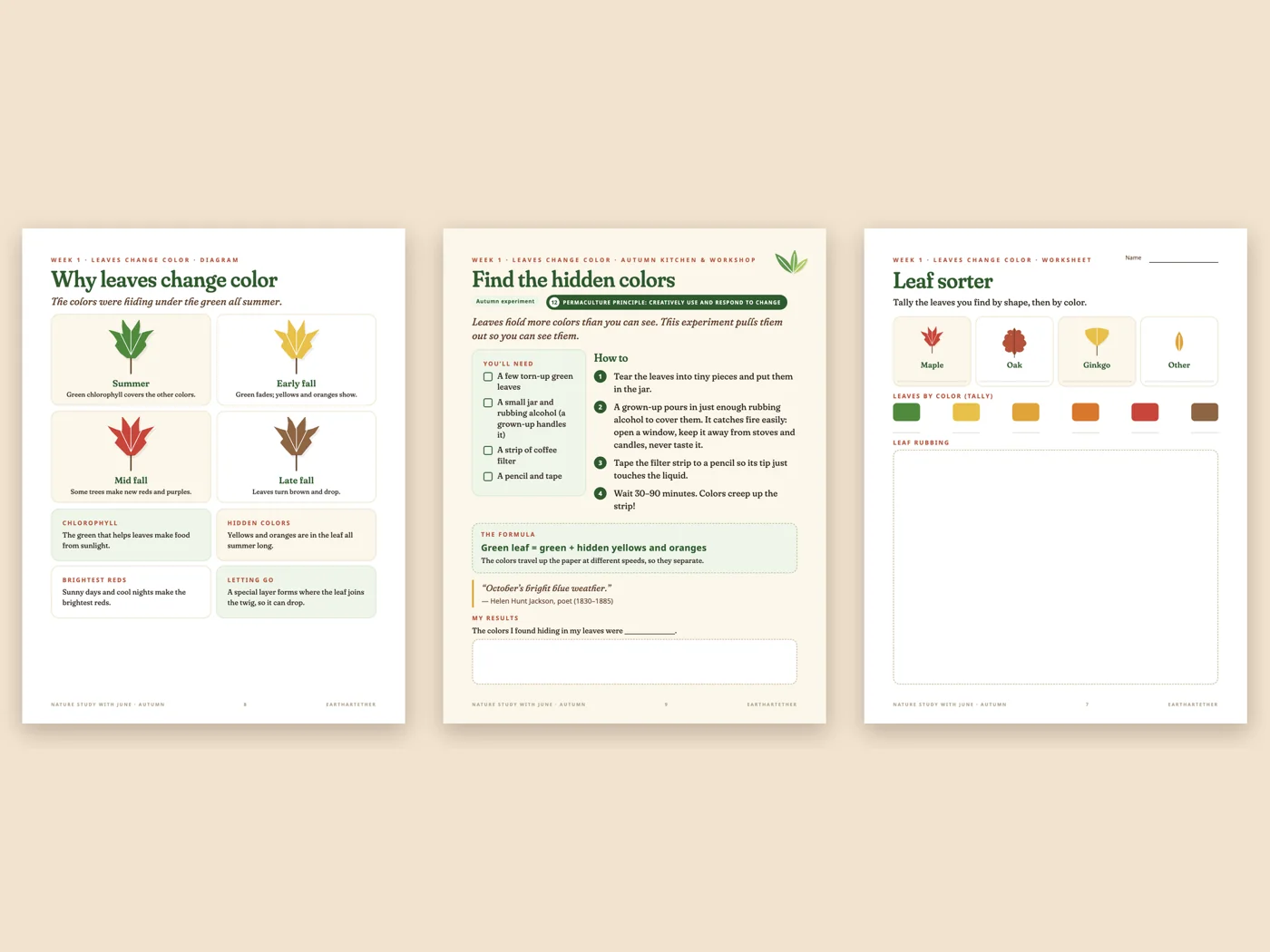
Leaves change color in fall because the shorter days tell trees to stop making green chlorophyll. As the green fades, yellows and oranges that were in the leaf all summer finally show through, and some trees make brand-new reds. You can see those hidden colors for yourself with a jar, a coffee filter and a few torn-up leaves.
This post explains the science in words a 6-year-old can follow, walks you through the hidden-colors experiment safely, and ends with a leaf sorting walk that works in any neighborhood with a few trees.
Why do leaves change color? The simple answer for kids
Chlorophyll is the green in a leaf. All summer, the green covers up the other colors in the leaf.
In fall, the nights get longer. Night length is the main signal for trees: as the nights stretch out, trees slow down and then stop making chlorophyll. As the green fades, other colors appear.
- Yellows and oranges were there all along. These colors, called carotenoids, sit in the leaf all summer, hidden under the green.
- Reds and purples are mostly new, made in autumn with help from bright light and sugars trapped in the leaf.
A good way to say it to a young child: “The colors were hiding all summer, under the green. The reds are a fall surprise.”
Weather plays a part too. The brightest colors come after warm, sunny days and cool, crisp nights that don’t freeze. Weather mostly changes how bright the colors are, not when they appear.
Why do leaves fall off trees?
Before a leaf drops, the tree grows a special layer of cells where the leaf stem meets the twig. This layer closes off the leaf’s veins, which is also what traps the sugars that help make reds. Eventually the leaf breaks off right there and leaves a small mark on the twig called a leaf scar. Scientists call the special layer the abscission layer (ab-SIZH-un). After the leaves fall, look closely at a twig together and see if you can find the scars.
Why let go at all? In winter, water is hard for trees to get, especially when the ground freezes. Dropping their leaves helps trees save water until spring. Trees also pull nutrients back out of their leaves before they let them fall.
Leaf chromatography experiment: find the hidden colors
This fall leaf science experiment pulls the colors out of a leaf so they spread up a strip of paper. It’s a lovely way to prove that the yellows really were hiding under the green.
Safety first. Rubbing alcohol is a grown-up job. It catches fire easily and its fumes are harmful. Open a window. Keep it far from stoves, candles and heaters. Never taste it.
What you need
- A few green leaves
- A small jar with a lid, or plastic wrap
- 70% rubbing alcohol (a grown-up handles it)
- A strip cut from a coffee filter
- A pencil and tape
- A bowl of hot tap water (optional)
- Goggles or glasses, if you have them
Steps
- Children tear the leaves into tiny pieces and put them in the jar.
- A grown-up adds just enough rubbing alcohol to cover the leaves, a little at a time. Then the grown-up caps the jar or covers it with plastic wrap and gives it a swirl. Cap the alcohol bottle and put it away right away.
- Optional: to help the color come out, the grown-up sets the closed jar in a bowl of hot tap water. Never use a stove, kettle, microwave or boiling water anywhere near the alcohol.
- Once the liquid has turned colored, uncap the jar. Tape the filter strip to the pencil and rest the pencil across the top of the jar so the tip of the strip just touches the liquid.
- Wait 30 to 90 minutes and watch the colors creep up the paper.
- Take the strip out, let it dry, and wash hands.
Why it works: a green leaf is green plus hidden yellows and oranges. The colors travel up the paper at different speeds, so they separate.
More safety notes for grown-ups: rubbing alcohol vapor can catch fire at room temperature, so keep it well away from gas stoves, pilot lights, candles and space heaters. The vapor can irritate eyes, nose and throat and cause dizziness and headache, which is why the window matters. If any is swallowed, call Poison Control at 1-800-222-1222.
A fall leaf sorting walk
The experiment shows what’s inside one leaf. A sorting walk shows how many different leaves share your street.
What to bring: a bag for fallen leaves, crayons and paper for rubbings, and a magnifying glass. Take only fallen leaves, and only a few.
- Collect fallen leaves of different shapes and colors.
- At home, sort them by color. Then mix them up and sort them again by shape.
- Try to name a few trees using these clues: - Maple: leaves grow in opposite pairs on the twig, and most look like a hand. - Red oak group: pointy lobes with tiny bristles at the tips. - White oak group: rounded lobes. - Ginkgo: shaped like a fan.
- Make leaf rubbings: lay paper over a leaf and rub with the side of a crayon.
- Finish with a journal page: draw your favorite leaf and color it exactly.
Questions to talk about: Why do you think trees drop their leaves? Which tree changed first? What else changes in autumn?
For different ages: younger children can simply sort leaves into piles by color. Older children can press leaves in a heavy book for a week and make their own leaf identification book.
When you’re done, leave the rest of the leaves where they fell. Caterpillars, cocoons, firefly young, bumble bee queens and beetles spend the winter tucked under fallen leaves.
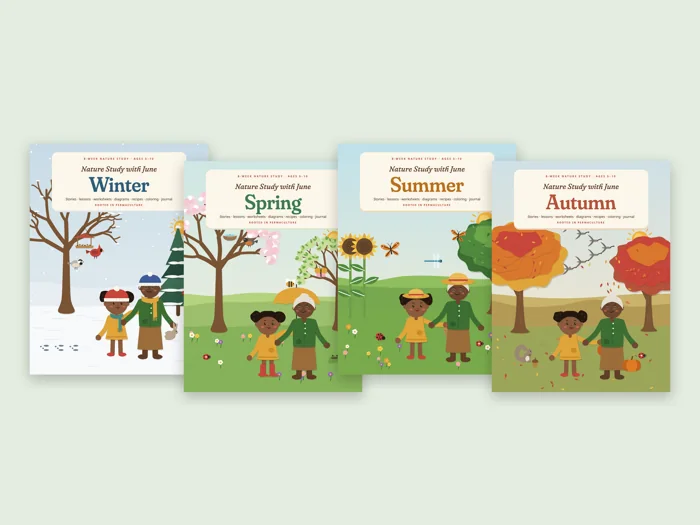
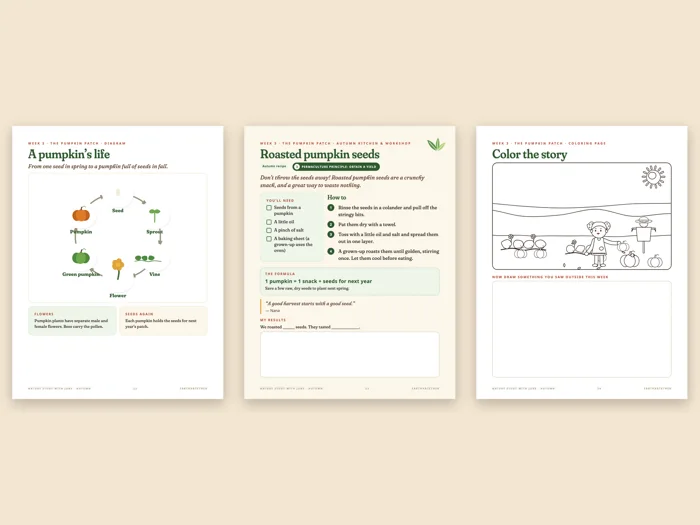
If you’d like the full 8-week fall study, leaves are week 1 of Nature Study with June: Autumn, with a leaf sorter worksheet, a labeled diagram of why leaves change, and a journal page. Pumpkin season is close behind: see our pumpkin life cycle for kids, and for a weekly plan that ties it all together, read how to start nature study with kids.
Frequently asked questions
Why are some autumns more colorful than others?
Weather mostly changes how bright the colors are. The brightest colors come after warm, sunny days and cool, crisp nights that don’t freeze. The timing of the change is driven mainly by night length.
Why do some leaves turn red and others only yellow?
The yellows and oranges were in the leaf all summer, so they show up when the green fades. Reds are different: most of them are made new in autumn, with help from bright light and sugars trapped in the leaf, and only some trees make them.
Is leaf chromatography safe for young kids?
Yes, when a grown-up handles the rubbing alcohol. Children tear the leaves, tape the strip and watch. The grown-up pours, caps and puts the bottle away, opens a window, and keeps the jar far from flames and heaters.
Why do evergreens stay green in winter?
Evergreen needles have a thick, waxy coating that helps keep water in during winter. Remember that saving water is a big reason other trees drop their leaves.
For more fall pages to print, take a look at our free printables.