 EarthArtEther
How to Start Nature Study With Kids: A Gentle Weekly Rhythm
How to start nature study with kids: a gentle weekly rhythm, what to pack for a nature walk, ways to adapt for ages 5 to 10, and ideas for every season.
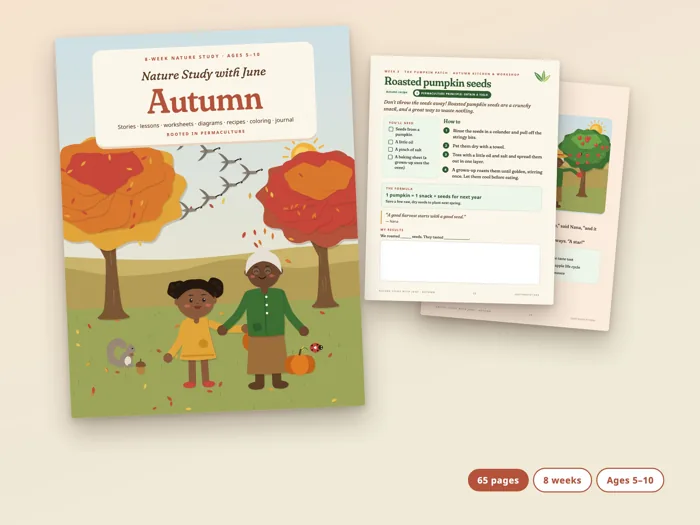
To start nature study with kids, choose one small topic each week and give it four parts: a story, a walk, one hands-on activity and a journal page. You don’t need a shelf of field guides or a perfect trail. A backyard, a park or a single street tree is enough to begin.
What follows is a calm, repeatable rhythm, a packing list for nature walks, ways to make it work for ages 5 to 10 and siblings together, and one idea for each season.
A simple weekly nature study rhythm
The trick is to keep the shape of the week the same, so the only new thing is the topic. Children know what to expect, and you never have to wonder what comes next.
- Read a story together. Start the week with a short story or picture book about the topic. It gives everyone a question to carry outside.
- Take a walk with one thing to look for. “Find three kinds of leaves” or “watch a squirrel for ten minutes” is far easier to hold onto than “notice nature.”
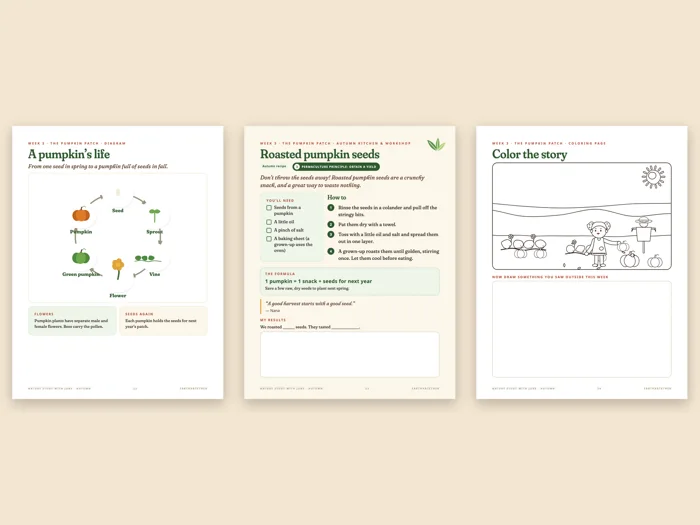
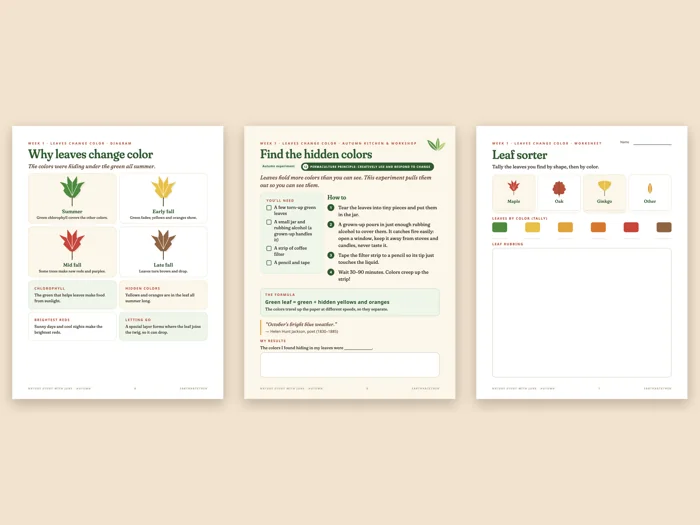
- Do one hands-on thing. An experiment, a recipe or a small garden project. Pull the colors out of a leaf, roast pumpkin seeds, or start a leaf pile.
- Finish with a journal page. Draw what you saw, label it, and write the date. Over a year, these pages become a record of your own place.
If your family follows a Charlotte Mason approach, this rhythm sits comfortably alongside the nature walks and nature notebooks you may already keep.
What to bring on a nature walk with kids
A small, ready bag means you can say yes to a walk any day of the week.
The everyday kit
- A clipboard with this week’s page
- Pencils and crayons
- A magnifying glass
- A bag for a few fallen treasures
- Binoculars, if you have them
- A water bottle and a snack
Add for the season
- Fall: a warm layer and comfortable shoes
- Winter: warm layers, a hat, mittens and waterproof boots
- Spring: rain boots and a rain jacket
- Summer: a sun hat, sunscreen and plenty of water
Simple nature walk rules
- Leave every living thing where you found it.
- Never touch or taste wild mushrooms or berries.
- Stay where a grown-up can see you.
- Take only fallen things, and only a few.
- Check for ticks after walks in long grass.
- Wash your hands when you get home.
The mushroom rule matters most. Never eat a wild mushroom, because some can kill. If any is swallowed, call Poison Control at 1-800-222-1222.
How to adapt nature study for ages 5 to 10 and siblings
Keep one topic for the whole family and change the depth, not the subject.
- Pumpkin week: a 5-year-old measures the pumpkin and draws it inside and out. A 9-year-old counts every seed in piles of 10 and checks it against a guess.
- Leaf week: a younger child sorts leaves into piles by color. An older child presses leaves in a heavy book for a week and makes a leaf identification book.
- Journal pages: younger children draw and tell you a sentence to write. Older children label their drawing and write their own notes.
Give older siblings a job, such as reading the story aloud or keeping the tally sheet. Little ones love having someone to copy.
Nature study ideas for every season
Autumn: squirrels and hidden leaf colors
Watch a squirrel at work. Gray squirrels bury nuts one at a time in many different hiding spots, and nuts they never dig up can sprout into new trees. Red squirrels do it differently and pile cones in a heap called a midden. For a hands-on week, try our leaf color experiment or the pumpkin life cycle for kids.
Winter: tracks in the snow and a bird count
When a rabbit hops, its big back feet swing past and land in front of its small front feet. A squirrel’s two small front feet usually land side by side. A deer track looks like a heart, and the pointed end shows which way the deer was going. In February, join the Great Backyard Bird Count: the 2027 count is February 12 to 15. Count birds for 15 minutes or more, then report them at birdcount.org. Change wet mittens right away, and skip outdoor play when the wind chill is below minus 15 °F.
Spring: watch one tree wake up
Choose one tree and visit it every few days. First the buds swell, then they crack open so a green tip peeks out, which some call bud burst. Next, tiny leaves unfold and spread out. The study of when yearly events like these happen is called phenology (fen-OL-oh-jee), and families can share their sightings with Nature’s Notebook, a citizen-science program.
Summer: a ladybug life cycle hunt
Ladybugs grow in four stages: egg, larva, pupa and adult. The larva looks like a tiny, spiky alligator, which makes it a fun one to find. In warm weather, egg to adult takes about four weeks, and one ladybug may eat as many as 5,000 aphids in its life. Wear sunscreen and a hat, drink water, find shade from late morning to midafternoon, and check for ticks afterward.
Why permaculture is a helpful lens for nature study
Permaculture means designing like nature does. David Holmgren set out 12 design principles for it, and several of them read like a nature study plan.
The first principle is “Observe and interact,” which is nature study in three words. Others give children a reason behind what they notice:
- Catch and store energy: the squirrel burying acorns for winter.
- Produce no waste: fallen leaves piled and kept damp turn into crumbly leaf mold in about 6 to 12 months (longer if the leaves are whole), and it helps soil hold water.
- Use edges and value the marginal: where two habitats meet, like woods and a meadow, you can often find extra kinds of plants and animals.
This lens moves children from “What is it?” to “What can we learn from it for our own garden?”
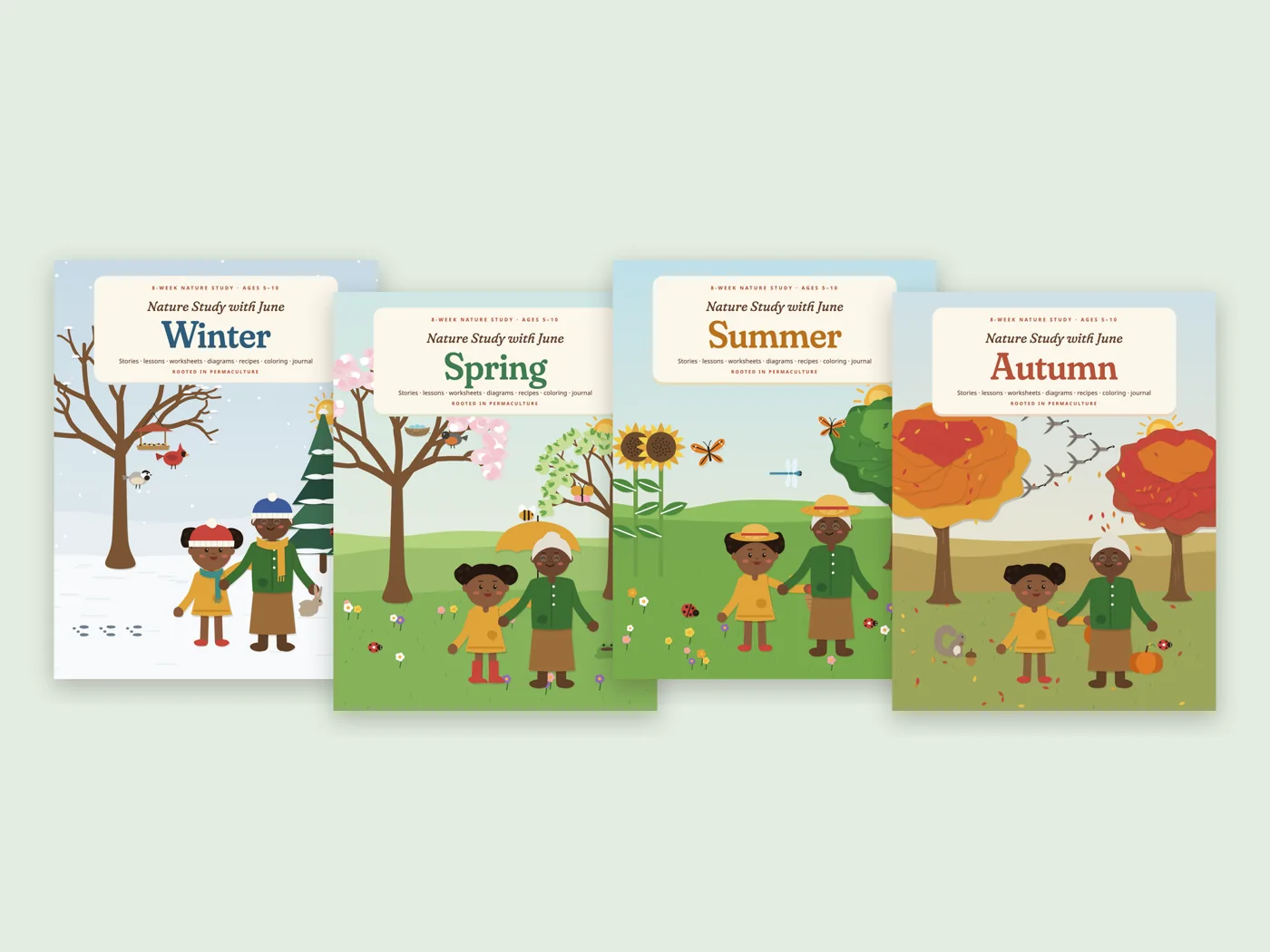
If you’d like a whole year laid out for you, Nature Study with June: A Whole Year has 32 weeks across the four seasons, easier and harder options on every lesson, and all 12 permaculture principles explained simply. You can begin with whatever season it is now.
Frequently asked questions
How much time does nature study take each week?
Less than you might think. A story, a walk, one activity and a journal page can each be short. An hour or two spread across the week is a comfortable place to start.
What if we don’t have woods or a big yard nearby?
Use what’s close. A street tree, a patch of lawn, a park or a window that looks out on the sky all change through the year. Returning to the same small place lets your child see it change.
Do I need to know the names of plants and birds?
No. Learning names together is part of the fun. Start by noticing shape, color and size, draw what you see, and look it up later. Your child will enjoy watching you learn too.
What age is best to start nature study?
Any age can enjoy a walk and a question. The rhythm in this post is written for ages 5 to 10, with simple options for younger children and deeper ones for older children.
When you’re ready for your first week, our free printables are a gentle place to begin.